Flyers
- Available with next day delivery
- Over 10.000 Free Design Templates
Create your design
OptionalChoose how you'd like to create your artwork:
Drop your file here or click to browse
/
Generating preview...
Applying adjustments...
·
Drop your file here or click to browse
/
Generating preview...
Applying adjustments...
·
About Flyers
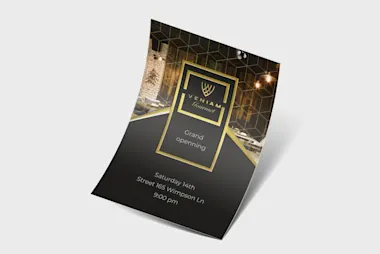
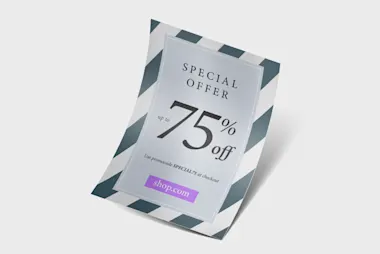
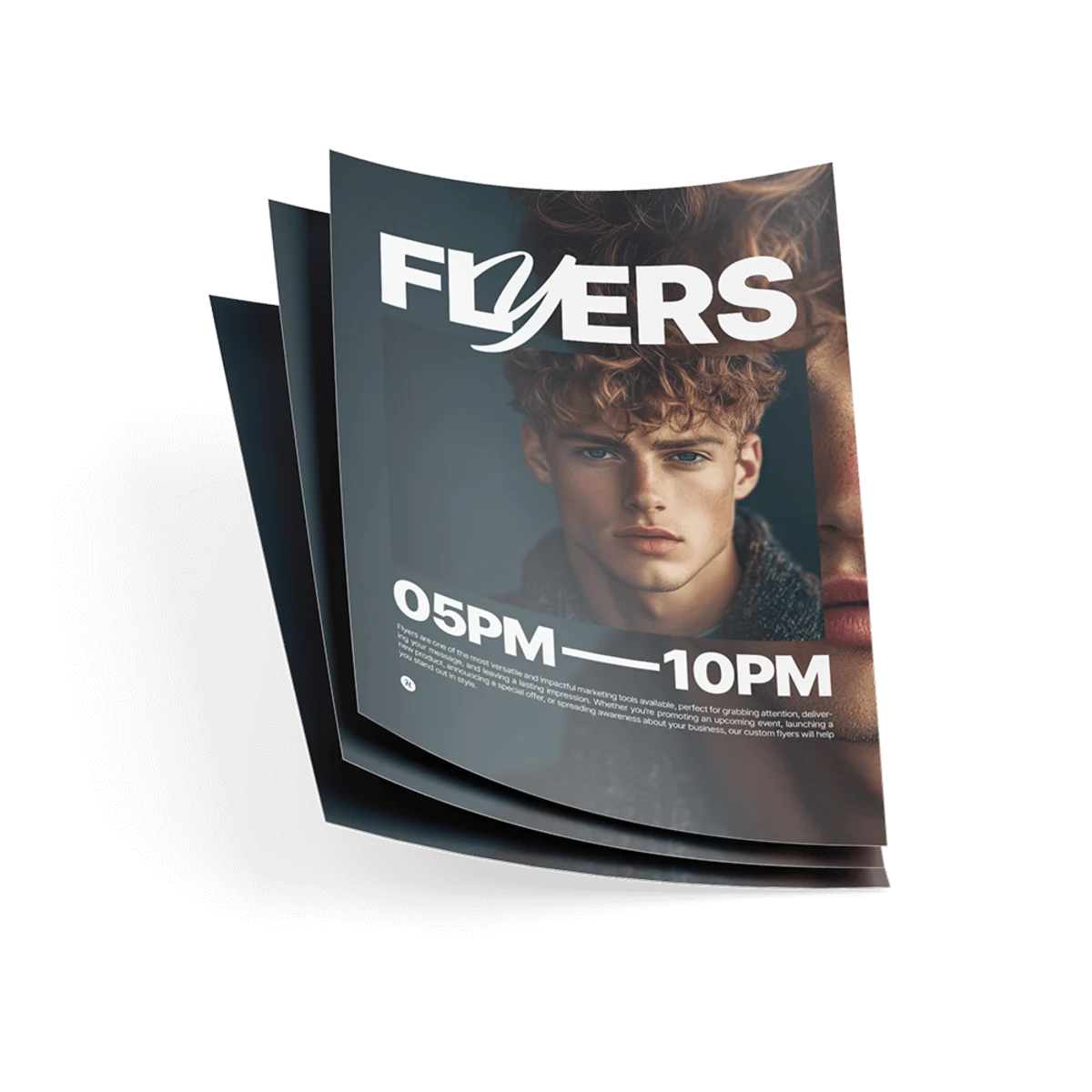
Use HelloPrint's customisable flyers to help your business, event or charity take flight. Flyers are weightless, durable and easy to distribute. They're also concise and to the point, making them the perfect tool to capture attention. We offer a multitude of sizes, materials and finishes - designing and printing your flyers has never been easier!
Note: Have more to say? Check out our range of Folded Leaflets.
Specifications
| Property | Value |
|---|---|
| Material | - 135 gsm to 400 gsm Silk (Matte) & Gloss art print machine coated paper - 140 gsm to 300 gsm offset paper (writable) - 170 g/m² Recystar Nature (100% recycled) |
| Finishing | - 400 gsm: Gloss, Matte, Gloss lamination, Matte lamination - 250 gsm: Gloss, Matte, Writable - 170 gsm: Matte, Writable - 135 gsm Gloss, Matte, Writable |
| Print technique | High-quality digital print |
| Print options | Single-sided | Double-sided |
| Print colour | Full colour |
FAQs
What is the best size for my flyer?
A6: This format is 105 x 148mm and most comparable to the size of a postcard. Though a tad smaller than your average flyer, it can still be designed to pack a punch for effective communication.
A5: This format is 148 x 210 mm and the standard flyer size used for promotional campaigns and marketing strategies. Flyers of this size are extremely convenient for distribution as well.
A4: The format is 210 x 297 mm and can be quite useful for companies, business enterprises, and local administrations with a lot of information to share. They can also easily be folded, put in an envelope and sent by post when needed (school leaflets, for example).
A3: This format is closer to the size of a small poster and would be convenient to display offers or upcoming events on walls and shop windows. Since they're large, they draw a lot of attention.
Square Format: This format of flyers can be used for more personal communication with potential customers. They're quite a unique format and are an elegant and original choice. They can also be transformed into invitations.
ALong / Xlong Format: The A-Long (74 x 210 mm) and X-Long (105 x 297 mm) format are both long and slim in appearance. They can be designed to make useful and engaging communication pieces. For example, they can be printed with illustrations and eye-catching text that is attractive to potential customers, who can then use them as bookmarks.
DL: This format is 99 x 210 mm and comparable to the size of an envelope. This means they can be easily tailored for direct marketing, and are convenient for advertisements or discount codes you would like to send to customers via post.
What paper can I use for my Flyers?
90 gsm is the thinnest paper option for your flyer, which makes it easy to distribute. This budget choice is the best option if you want the feeling of standard paper for your flyer.
135 gsm is the most common choice since it’s lightweight and easy to distribute. It is also less prone to wrinkling than standard printing paper, as it's 1.5x thicker. This option is a bargain for businesses with a small marketing budget because it can be arranged at a price that won't break the bank.
170 gsm paper flyers are often the chosen for conferences and trade shows. Being about 2x thicker than standard printing paper, their sturdiness makes them an attractive option for professional gatherings.
250 gsm paper flyers are often ordered by companies within the hospitality and retail industries. This paper type is 3x the thickness of standard printing paper, so they'll feel extremely sturdy in the hand.
400 gsm paper flyers are the most premium option, but can still be ordered at an economical price. At 4x the thickness of standard printing paper, this choice guarantees a robust and luxurious flyer, which is great for special occasions or events.
What material can I choose for my flyers?
Matte: The matte finish is quite subtle and is perfect if your design is text-heavy.
Offset | Writable: This paper is uncoated, making it ideal for writing. It's perfect if you need your customers to write down information.
Recystar Nature: 100% recycled paper and sustainably produced. The natural white colour gives the print a natural look.
Bio Top: Recyclable and made through a chlorine-free (TCF) bleaching process with no optical brightening agents. This process leaves the paper with an off-white colour and a natural, uncoated texture. It is pleasant to the touch and comfortable for reading.
PaperWise Natural: Unbleached and made from agricultural waste. Sustainable with low environmental impact, it is uncoated and has a natural light brown colour.
UV-varnish: The UV-varnish finish gives your flyer an ultra glossy appearance, making it look quite luxurious.
Matte lamination: The matte lamination finish adds an extra layer to your flyer. Similar to the matte finish, this is also subtle and is perfect if your flyer is text heavy. The added layer also acts as extra protection for your flyer.
Gloss lamination: The glossy lamination adds an extra layer to your flyer. Similar to the glossy finish, this also gives your flyers a sheen and is perfect for photographs as the colours show up quite vivid. The added layer also acts as extra protection for your flyer.
Which production techniques do we use?
Digital printing: Uses four colours (CMYK) with toners and inks to print digital files. This option is comparable to a large home printer, and is cheaper than Litho printing for smaller quantities. This is because there are fewer starting costs, fewer components involved, and no ink drying time required.
Offset Lithography/Litho printing: This technique uses wet ink and aluminium and rubber plates to transfer images and text onto paper sheets, resulting in sharp, vibrant, and consistent prints. While this method may require slightly more setup than digital printing, it's the most cost-effective option for larger print runs.
How long does leaflet printing take?
Flyers
- Available with next day delivery
- Over 10.000 Free Design Templates
Create your design
OptionalChoose how you'd like to create your artwork:
Drop your file here or click to browse
/
Generating preview...
Applying adjustments...
·
Drop your file here or click to browse
/
Generating preview...
Applying adjustments...
·
About Flyers
Use HelloPrint's customisable flyers to help your business, event or charity take flight. Flyers are weightless, durable and easy to distribute. They're also concise and to the point, making them the perfect tool to capture attention. We offer a multitude of sizes, materials and finishes - designing and printing your flyers has never been easier!
Note: Have more to say? Check out our range of Folded Leaflets.
Specifications
| Property | Value |
|---|---|
| Material | - 135 gsm to 400 gsm Silk (Matte) & Gloss art print machine coated paper - 140 gsm to 300 gsm offset paper (writable) - 170 g/m² Recystar Nature (100% recycled) |
| Finishing | - 400 gsm: Gloss, Matte, Gloss lamination, Matte lamination - 250 gsm: Gloss, Matte, Writable - 170 gsm: Matte, Writable - 135 gsm Gloss, Matte, Writable |
| Print technique | High-quality digital print |
| Print options | Single-sided | Double-sided |
| Print colour | Full colour |
FAQs
What is the best size for my flyer?
A6: This format is 105 x 148mm and most comparable to the size of a postcard. Though a tad smaller than your average flyer, it can still be designed to pack a punch for effective communication.
A5: This format is 148 x 210 mm and the standard flyer size used for promotional campaigns and marketing strategies. Flyers of this size are extremely convenient for distribution as well.
A4: The format is 210 x 297 mm and can be quite useful for companies, business enterprises, and local administrations with a lot of information to share. They can also easily be folded, put in an envelope and sent by post when needed (school leaflets, for example).
A3: This format is closer to the size of a small poster and would be convenient to display offers or upcoming events on walls and shop windows. Since they're large, they draw a lot of attention.
Square Format: This format of flyers can be used for more personal communication with potential customers. They're quite a unique format and are an elegant and original choice. They can also be transformed into invitations.
ALong / Xlong Format: The A-Long (74 x 210 mm) and X-Long (105 x 297 mm) format are both long and slim in appearance. They can be designed to make useful and engaging communication pieces. For example, they can be printed with illustrations and eye-catching text that is attractive to potential customers, who can then use them as bookmarks.
DL: This format is 99 x 210 mm and comparable to the size of an envelope. This means they can be easily tailored for direct marketing, and are convenient for advertisements or discount codes you would like to send to customers via post.
What paper can I use for my Flyers?
90 gsm is the thinnest paper option for your flyer, which makes it easy to distribute. This budget choice is the best option if you want the feeling of standard paper for your flyer.
135 gsm is the most common choice since it’s lightweight and easy to distribute. It is also less prone to wrinkling than standard printing paper, as it's 1.5x thicker. This option is a bargain for businesses with a small marketing budget because it can be arranged at a price that won't break the bank.
170 gsm paper flyers are often the chosen for conferences and trade shows. Being about 2x thicker than standard printing paper, their sturdiness makes them an attractive option for professional gatherings.
250 gsm paper flyers are often ordered by companies within the hospitality and retail industries. This paper type is 3x the thickness of standard printing paper, so they'll feel extremely sturdy in the hand.
400 gsm paper flyers are the most premium option, but can still be ordered at an economical price. At 4x the thickness of standard printing paper, this choice guarantees a robust and luxurious flyer, which is great for special occasions or events.
What material can I choose for my flyers?
Matte: The matte finish is quite subtle and is perfect if your design is text-heavy.
Offset | Writable: This paper is uncoated, making it ideal for writing. It's perfect if you need your customers to write down information.
Recystar Nature: 100% recycled paper and sustainably produced. The natural white colour gives the print a natural look.
Bio Top: Recyclable and made through a chlorine-free (TCF) bleaching process with no optical brightening agents. This process leaves the paper with an off-white colour and a natural, uncoated texture. It is pleasant to the touch and comfortable for reading.
PaperWise Natural: Unbleached and made from agricultural waste. Sustainable with low environmental impact, it is uncoated and has a natural light brown colour.
UV-varnish: The UV-varnish finish gives your flyer an ultra glossy appearance, making it look quite luxurious.
Matte lamination: The matte lamination finish adds an extra layer to your flyer. Similar to the matte finish, this is also subtle and is perfect if your flyer is text heavy. The added layer also acts as extra protection for your flyer.
Gloss lamination: The glossy lamination adds an extra layer to your flyer. Similar to the glossy finish, this also gives your flyers a sheen and is perfect for photographs as the colours show up quite vivid. The added layer also acts as extra protection for your flyer.
Which production techniques do we use?
Digital printing: Uses four colours (CMYK) with toners and inks to print digital files. This option is comparable to a large home printer, and is cheaper than Litho printing for smaller quantities. This is because there are fewer starting costs, fewer components involved, and no ink drying time required.
Offset Lithography/Litho printing: This technique uses wet ink and aluminium and rubber plates to transfer images and text onto paper sheets, resulting in sharp, vibrant, and consistent prints. While this method may require slightly more setup than digital printing, it's the most cost-effective option for larger print runs.
How long does leaflet printing take?
Logos
Brand Colours
Brand Fonts
Select from your Canva designs
Powered by CanvaNo designs found. Try a different search.
Opening Adobe Express…
The design editor is loading.